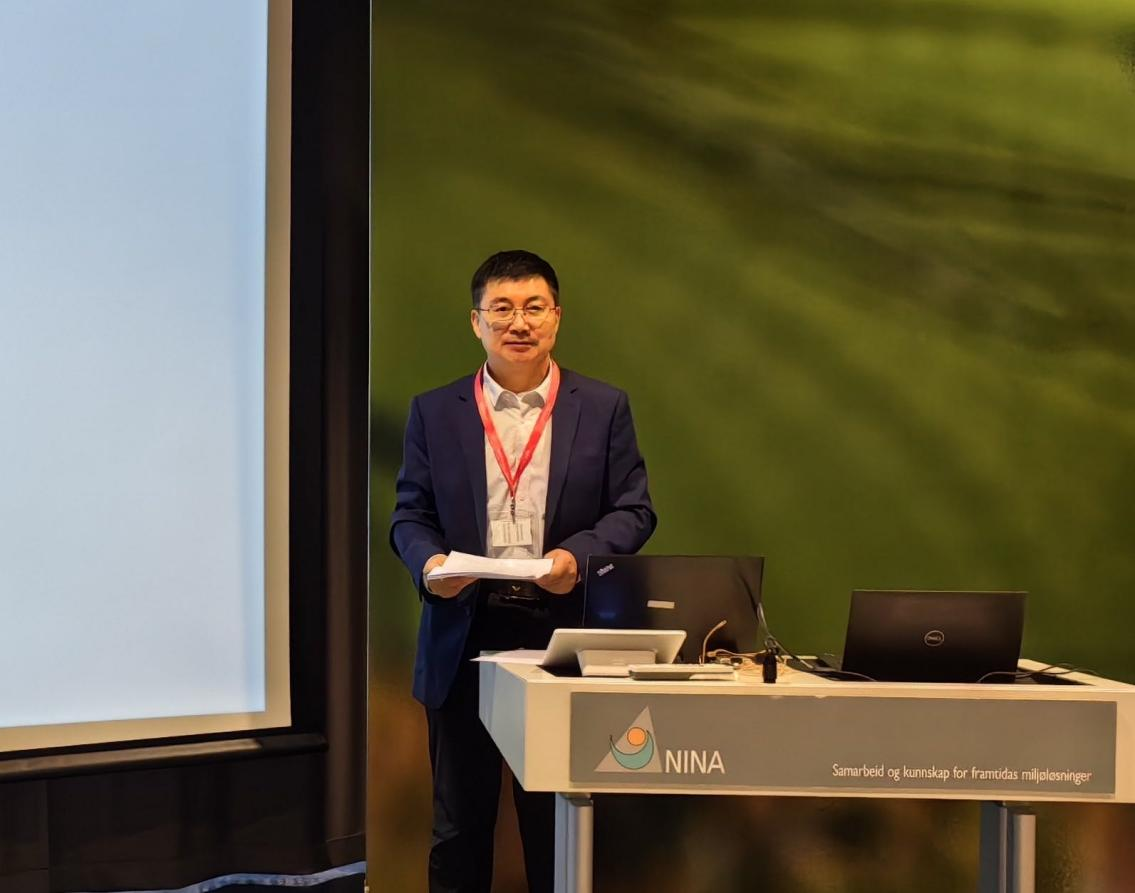
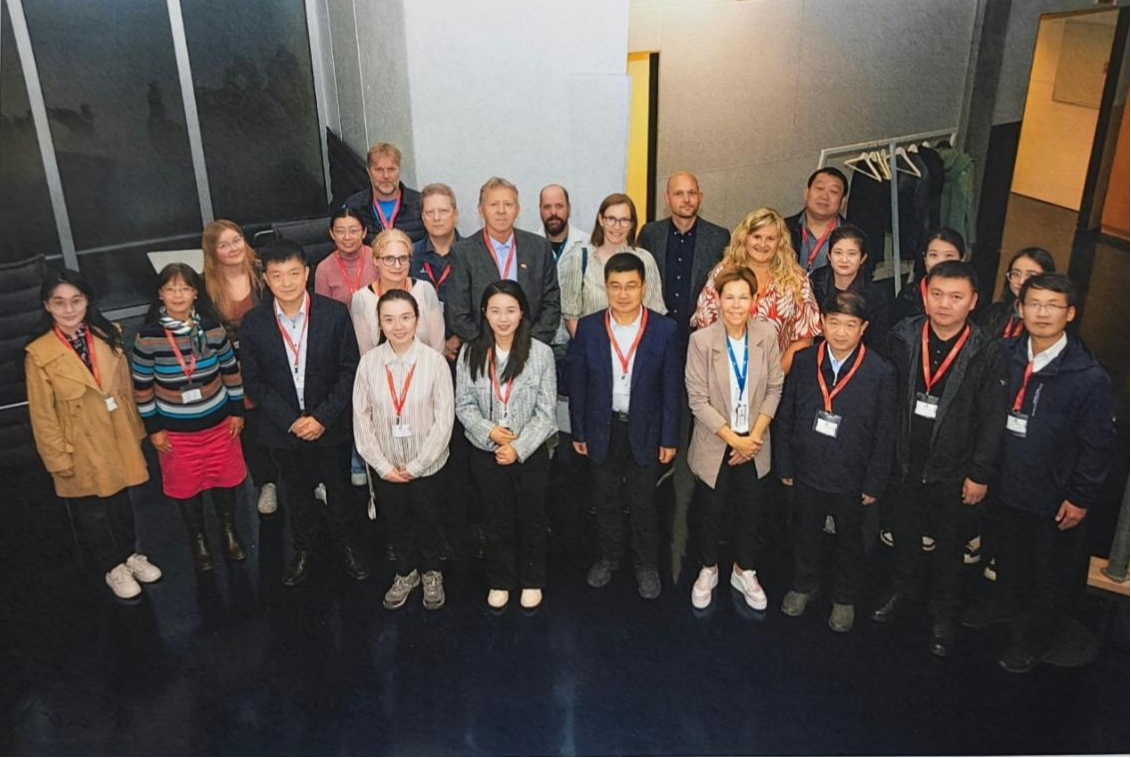
To promote the implementation of the China-Norway cooperation project "Biodiversity Conservation in China under the Background of Climate Change" and to further discuss and exchange knowledge, technology, and experience in the field of biodiversity adaptation to climate change, at the invitation of the Norwegian Environment Agency, the director of NIES, Liu Guocai, led a delegation to Norway for bilateral exchanges and discussions on biodiversity conservation under the background of climate change. From September 3rd to 5th, 2024, China and Norway jointly held a bilateral seminar on "Biodiversity Conservation in China under the Background of Climate Change." Ivar Myklebust, Director of the Norwegian Environment Agency, Norunn S. Myklebust, Director of the Norwegian Institute for Nature Research, Liu Guocai, Director of NIES, and Xiao Ping, Director of the Inner Mongolia Autonomous Region Ecological Environment Low-Carbon Development Center attended the meeting and delivered speeches. Members of the project from the Norwegian Environment Agency (NEA), Norwegian Institute for Nature Research (NINA), Norwegian Institute of Bioeconomy Research (NIBIO), NIES, and Inner Mongolia Autonomous Region Ecological Environment Low-Carbon Development Center participated in the meeting.

Director Liu Guocai expressed his gratitude to the Norwegian Environment Agency for the invitation, emphasizing that the Chinese government has always placed a high priority on biodiversity conservation and on addressing global challenges such as climate change and biodiversity loss in a coordinated manner. Director Liu fully affirmed the achievements of the project and put forward requirements for both Chinese and Norwegian parties to further improve the research of the project and achieve landmark results. Director Liu also introduced the research fields and main achievements of NIES, hoping that on the 30th anniversary of China-Norway environmental cooperation, all parties involved in the cooperation will use the project as a link to explore more areas of cooperation and provide scientific and technological support for effectively addressing climate change and protecting biodiversity.
Project Leader Long Tao, Director of the Soil Center at NIES, introduced the overall progress and phased achievements of the project. Key members of each subject introduced the research progress from aspects such as China's biodiversity conservation policy under the background of climate change, biodiversity management policy measures and strategies in the priority area of Xilingol under the background of climate change, development of land use management models conducive to soil carbon sequestration in the Dali Lake shore area, biodiversity restoration and protection measures in the Dali Lake shore area, and demonstration of management strategies for selected endangered and invasive species under the background of climate change. They also exchanged and discussed with Norwegian representatives on the content of the subjects.
Members of the project from the Norwegian Environment Agency, Norwegian Institute for Nature Research, and Norwegian Institute of Bioeconomy Research each gave thematic reports, sharing and exchanging technical methods and experience results in the project.

During the stay in Norway, the project team conducted in-depth exchanges in the demonstration area of Norwegian wetland ecological restoration projects. They learned about Norway's degraded wetland ecological restoration technology, experience and practices for improving ecological environment quality, and discussed methods and paths that coordinate ecological, economic, and social benefits.

Director Liu Guocai concluded the meeting, calling for further refinement of scientific and technological needs, clarification of the goals of each project research, and high-quality completion of the set tasks. Efforts should be made to achieve landmark results, providing successful cases and experience for both Chinese and Norwegian parties, as well as the global fulfillment of international environmental conventions and the implementation of the "Kunming-Montreal Framework." It is necessary to further deepen the cooperation mechanism, strengthen communication in more fields, enhance understanding, and form a joint force in the promotion of the project, setting an example in China-Norway cooperation.